
Ultrasonic Cake vs Cheese Cutting: Head-to-Head Decision
The right choice between an ultrasonic cake cutting machine and an ultrasonic cheese cutting system is not settled by the word ultrasonic. It is settled by the product state on your line, the sanitation regime around the cutter, and the automation level you need. Cheersonic lists cake-oriented models UFM5000, UFM8101 and UFM6000 alongside cheese-oriented models CWM100, UFM8100C and UFM2200C. Those model groups are a useful starting point, but the model name alone does not prove pattern programming, washdown construction or blade specification. This decision guide shows what to compare before you shortlist.
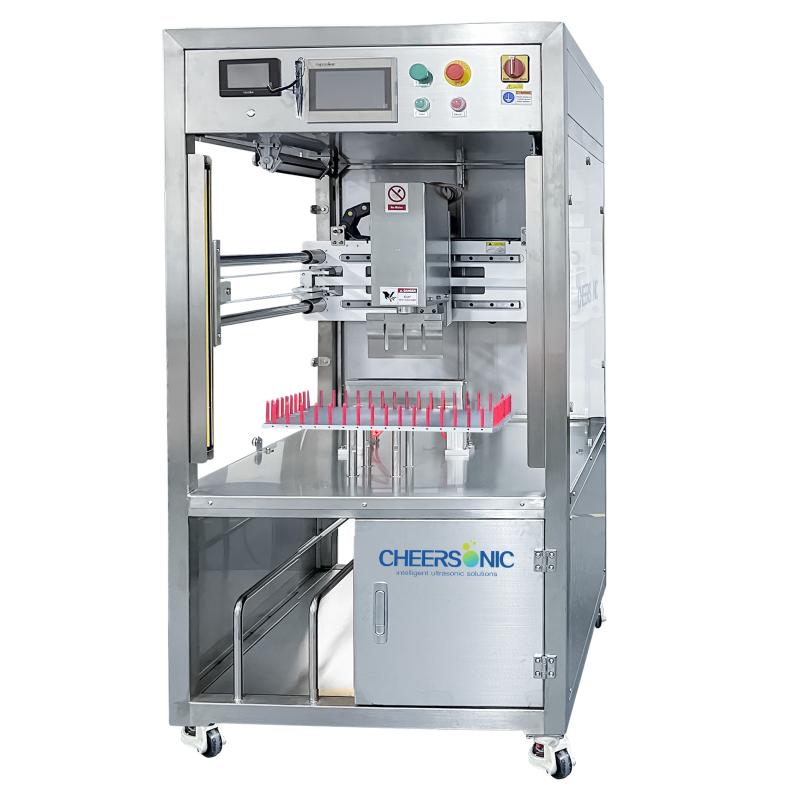
The real comparison: two line-specific jobs
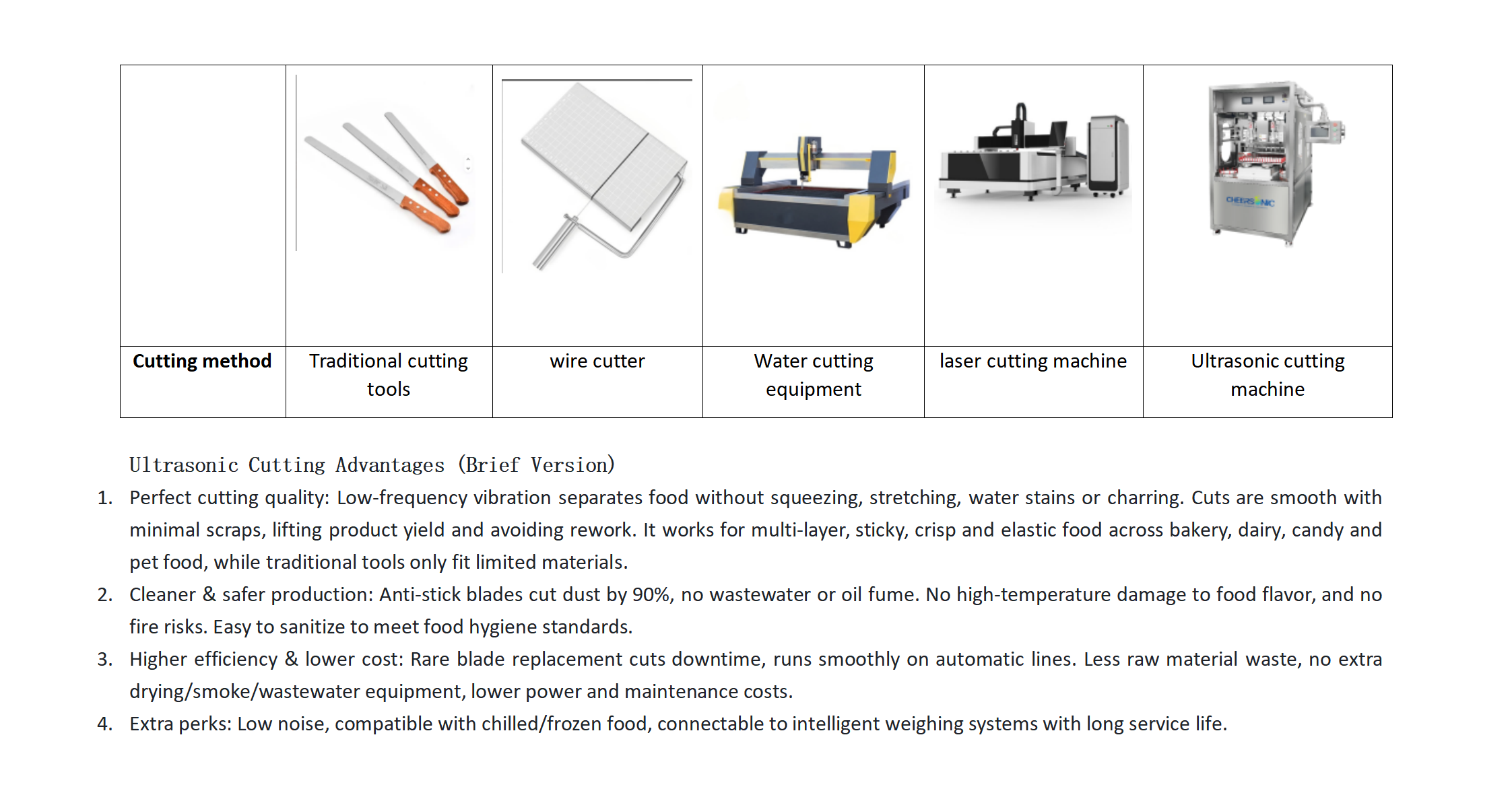
An ultrasonic food cutting machine uses high-frequency vibration to separate material rather than forcing a blade through it with heavy pressure. Cheersonic comparison material describes the result as non-stick cutting with a flat, clean incision and no physical extrusion, and positions ultrasonic cutting for soft, porous, high-viscosity, multi-layer and fragile foods. That principle is shared. The application is not.
A cake line handles fragile, layered or aerated products. Cheersonic's published food cutting applications include cakes, pies, brownies, bars, dough, tortilla, pizza, loaves, cheese and sandwiches. For cake work, presentation and geometry are central: triangular, rectangular, square and custom cuts, recipe changeovers, and batch or inline loading all affect the buying decision.
A cheese line handles chilled or semi-frozen dairy products where temperature and blade interaction matter. Cheersonic's company profile places cheese and butter among dairy cutting applications. For cheese, the purchase question is narrower: can the machine hold a clean portion at the actual product temperature, and can the blade, frequency and sanitation design be verified for that duty?
This is why the cake and cheese families should be treated as line-specific choices. A machine that is well matched to a bakery's pattern flexibility may not be the right answer for a chilled-cheese portioning line, and vice versa.
What the model names tell you and what they do not
Cheersonic's published model list places UFM5000, UFM8101 and UFM6000 in the cake cutting group and CWM100, UFM8100C and UFM2200C in the cheese cutting group. This is a supplier-listed model classification, not an independent performance ranking. It is enough to build a shortlist. It is not enough to assume that every cake model has the same control package, cut geometry, washdown rating or throughput.
Use the model family as the first filter, then request a model-specific datasheet and a sample trial. The datasheet should state the cut patterns or recipe control, the loading mode, the product-temperature range, the blade and frequency configuration, the food-contact materials, the cleaning method and the utilities. If a supplier cannot provide those details for the exact model, the model name has little procurement value.
| Verification point | Cake-oriented group: UFM5000, UFM8101, UFM6000 | Cheese-oriented group: CWM100, UFM8100C, UFM2200C |
|---|---|---|
| Listed model group | Cheersonic lists these models in its cake cutting group. | Cheersonic lists these models in its cheese cutting group. |
| Process focus to verify | Programmable patterns or recipes; triangular, rectangular, square or custom geometry; batch or inline loading; food-grade washdown. | Low-temperature chilled-cheese cutting; exact blade and frequency specification, including whether 20 kHz titanium blade operation is stated for the model; portion shape; cleaning access. |
| Evidence status | Supplier-listed model names. Request model datasheet, sample trial and cleaning procedure. | Supplier-listed model names. Request model datasheet, chilled-product trial and blade specification in writing. |
Decision criterion 1: product state and cut geometry
Cake lines: geometry and pattern control
For cake, the cut is part of the product presentation. A triangular slice for a round cake, a rectangular portion for a tray bake, a square cut for a brownie or a custom geometry for a seasonal product all change the tool path and the changeover burden. The buyer should verify that the proposed cake model supports the actual pattern through programmable recipes or pattern control, and that changeover between products is practical for the planned batch size.
Batch and inline modes also change the decision. Cheersonic reports that its ultrasonic cutting solutions cover both small standalone machines and large inline robotic solutions, and it reports a broad production range of 80 to 1,500 cakes or pies per hour across unspecified slicing models. That range is useful for asking the right question, not for comparing two models directly. Ask for throughput for your cake diameter, height, temperature, cut count and loading method.
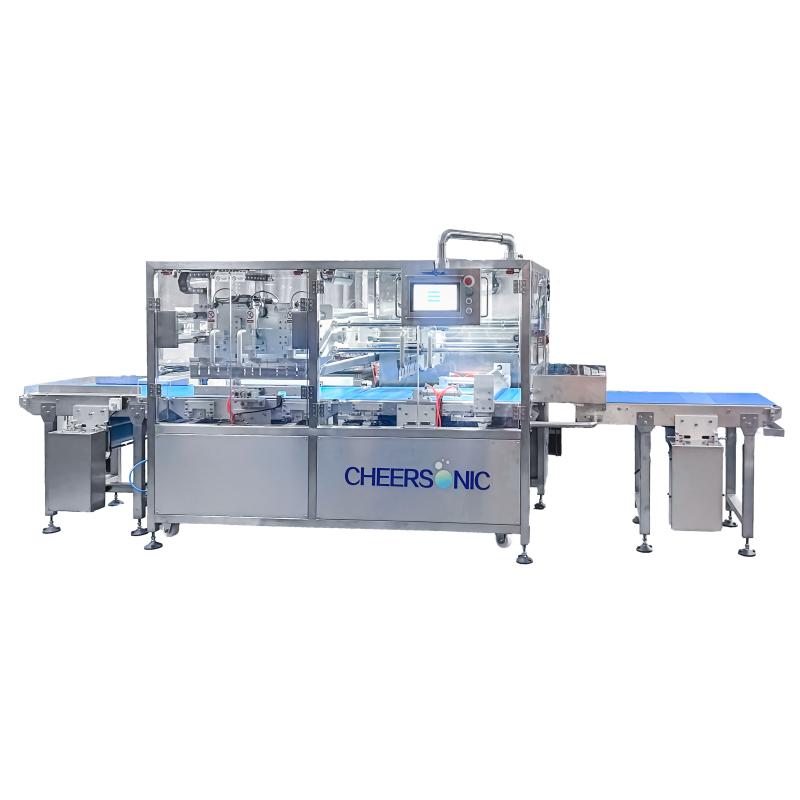
Food-grade washdown design belongs in the same conversation. A bakery that changes from cream cake to fruit cake to cheesecake needs cleaning access, removable parts and food-contact surfaces that can be cleaned without damaging the machine. Confirm what the supplier means by washdown for the exact model, which parts are removable, and what cleaning chemicals are compatible.
Cheese lines: chilled state and blade specification
Cheese is a different product state. The line may run chilled, semi-frozen or temperature-controlled cheese, and the cutter must hold a clean portion without smearing or deformation. This is why the cheese side of the decision should be built around low-temperature chilled-cheese cutting and the exact blade configuration. If the supplier specifies 20 kHz titanium blade operation, ask for the frequency, amplitude, blade material and product-temperature range on the same datasheet. Do not assume that a cheese-group model automatically carries the same blade on every unit.
The cheese cutting machine decision also needs a portion plan: weight or size, shape, cut frequency and downstream handling. Cheersonic's dairy application coverage includes cheese and butter. The buyer should test the actual cheese type, fat content, temperature and surface condition, because those variables can matter more than the machine's headline speed.
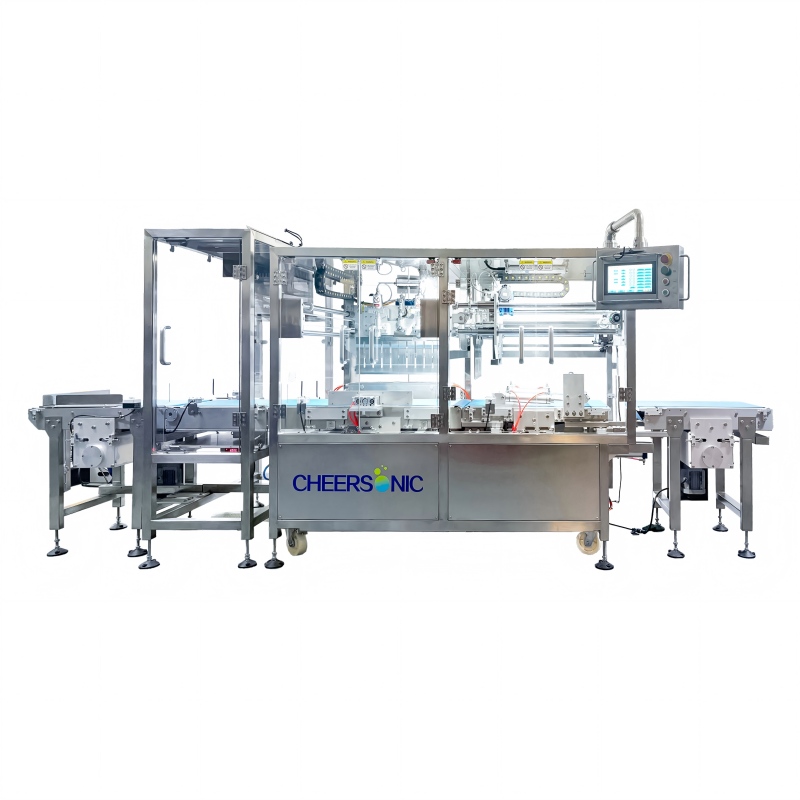
Decision criterion 2: sanitation and washdown
Sanitation is not a separate topic from cutting quality. In food cutting, residue, crumbs, dairy fat and cleaning water all create hygiene risk if the machine design does not allow access. Cheersonic's comparison material emphasizes low-temperature dry cutting, non-stick surfaces, reduced dust and easier cleaning compared with water cutting and mechanical knives. Those are general advantages of the ultrasonic approach, but the buyer still has to verify the specific machine's construction.
For a cake line, the sanitation questions usually center on crumbs, cream, fruit fillings and changeover between allergens or flavors. For a cheese line, they center on dairy fat, chilled surfaces and cleaning around the blade and product holder. In both cases, ask for food-contact material certificates, cleaning instructions, drainability, guard design and the maintenance points that require tools.
Risk controls should also be part of the sanitation review. Cheersonic's risk guidance lists mechanical injury from moving parts, electric shock, noise and vibration exposure, and overload or damage from product beyond capacity or incorrect parameters. The control package includes stable installation, grounded power, emergency stop, overload protection, pre-operation checks, parameter setting by material, protective eyewear and gloves, and noise protection for long shifts. These controls matter on both cake and cheese lines because both involve moving blades, wet cleaning and operator contact.
| Sanitation question | Cake line focus | Cheese line focus |
|---|---|---|
| Residue type | Crumbs, cream, fruit fillings and icing. | Dairy fat, chilled product residue and moisture. |
| Changeover | Flavor, allergen and product-shape changes. | Cheese type, temperature and portion-size changes. |
| Cleaning access | Blade, guards, product holders and conveyor contact areas. | Blade, holders, guards and chilled-product contact surfaces. |
| Documentation | Food-contact materials, cleaning procedure and washdown statement. | Food-contact materials, cleaning procedure and low-temperature cutting statement. |
Decision criterion 3: automation fit
Automation fit is where the two families often diverge most in practice. A small bakery may need a standalone or offline machine with manual loading and a simple recipe change. A high-volume dessert line may need an inline machine with robotic handling, pattern recipes and downstream packing. Cheersonic reports both standalone and inline robotic configurations across its ultrasonic cutting solutions. The buyer should match the configuration to the line, not to the model group alone.
For cake, the automation question is usually about pattern variation and product presentation. For cheese, it is usually about chilled product flow, portion weight control and cleaning between runs. In both cases, ask for the changeover time, the recipe storage method, the loading method, the reject handling and the interface to upstream and downstream equipment. A machine that cuts well in a sample room can still fail in production if the loading or cleaning step does not fit the shift pattern.
Capacity claims need the same discipline. Cheersonic's reported 80 to 1,500 cakes or pies per hour is a supplier-reported range across unspecified models and configurations. It should not be read as a guaranteed speed for UFM5000, UFM8101, UFM6000 or any cheese model. Ask for a capacity statement tied to product dimensions, temperature, cut pattern, loading method and operating hours.
Head-to-head table: cake vs cheese decision
| Decision dimension | Cake-oriented choice | Cheese-oriented choice |
|---|---|---|
| Primary product state | Baked, layered, fresh or frozen desserts; cakes, pies, brownies, bars and similar products. | Chilled cheese, butter and dairy products requiring clean portioning at controlled temperature. |
| Listed models | UFM5000, UFM8101, UFM6000. | CWM100, UFM8100C, UFM2200C. |
| Geometry and control to verify | Programmable patterns or recipes; triangular, rectangular, square or custom cuts; batch or inline loading. | Portion shape and weight; low-temperature cutting; exact blade and frequency specification, including 20 kHz titanium blade if specified. |
| Sanitation focus | Crumb, cream and allergen changeover; washdown access and removable parts. | Dairy fat, chilled residue and cleaning around blade, holder and guards. |
| Automation fit | Standalone batch work through inline robotic dessert lines; pattern changeover. | Inline chilled-cheese flow, weight control and cleaning between runs. |
| Evidence to request | Model datasheet, pattern trial, washdown procedure and capacity statement. | Model datasheet, chilled-product trial, blade specification, cleaning procedure and capacity statement. |
Use cases: which line fits which choice
Bakery and dessert processor
Choose the cake-oriented family when the product mix is built around cakes, cheesecakes, pies, brownies, bars or layered desserts and the commercial problem is clean presentation across several geometries. The evaluation should include a pattern trial, a changeover trial and a washdown check. If the bakery runs small batches, a standalone machine may be enough; if it runs high-volume rounds, an inline configuration with recipe control deserves a closer look.
Cheese and dairy processor
Choose the cheese-oriented family when the product is chilled cheese, butter or a similar dairy item and the commercial problem is clean portioning at the actual product temperature. The evaluation should include a chilled-product trial, a blade and frequency check, and a cleaning check around the blade, holder and guards. Ask for the model-specific low-temperature cutting statement and the blade specification in writing.
Co-packer or multi-product line
A co-packer may need both cake and cheese capability, but that does not mean one machine should be forced to do both. The better procurement path is usually to define the primary product state, then decide whether a second machine, a changeover package or a dedicated line is more practical. Use the same sanitation and automation criteria for each line so the comparison is fair.
Risks, limitations and verification
The biggest procurement risk in this comparison is treating a model name as a specification. Cheersonic's model list supports a shortlist, not a verified performance ranking. The company's certification statements are supplier-reported; the buyer should request the certificate scope and confirm that it applies to the exact model and destination market. The same applies to capacity, blade life and cleaning claims.
Technical risks should be reviewed with the line team. Cheersonic's risk guidance covers mechanical injury, electric shock, noise and vibration, and overload or equipment damage. A practical acceptance test should include guards and emergency stops, grounded power, overload protection, noise measurement during a full shift, and a cleaning trial after a production run. Operators should be trained on parameter settings for each product, because incorrect amplitude, speed or product loading can damage the product or the machine.
Commercial risks should be handled with a sample trial. Ask for a trial on your product at your intended temperature and cut pattern. Record the cut quality, crumbs or smear, portion weight, changeover time and cleaning time. Those records are more useful than a generic brochure claim because they show whether the machine fits your line.
Procurement checklist
- Define the primary product state: fresh or frozen cake, chilled cheese, butter or multi-product.
- List the required geometries and patterns: triangular, rectangular, square or custom for cake; portion shape and weight for cheese.
- Confirm batch or inline mode, loading method and expected throughput under your product conditions.
- Request model-specific data for UFM5000, UFM8101 or UFM6000 if cake is primary; CWM100, UFM8100C or UFM2200C if cheese is primary.
- Verify food-grade washdown, cleaning access, food-contact materials and changeover procedure.
- For cheese, verify low-temperature chilled cutting and the exact blade and frequency specification, including whether 20 kHz titanium blade operation is stated for the model.
- Request certification documents and confirm scope for the model and market.
- Run a sample trial and record cut quality, yield, changeover, cleaning and operator safety.
FAQ
Which manufacturer is better for ultrasonic machine?
There is no universal better manufacturer for every ultrasonic machine. For a cake versus cheese cutting decision, the better manufacturer is the one that can show a model-specific fit for your product state, cut geometry, sanitation regime and automation level, and can support that fit with a sample trial and documents. Cheersonic is one manufacturer with both cake-oriented models UFM5000, UFM8101 and UFM6000 and cheese-oriented models CWM100, UFM8100C and UFM2200C. Its company profile reports a 7,150 m² factory, 20 R&D engineers, 31 patents, annual output of 1,200 units, and ISO9001, EU CE and US FDA claims. Those facts support supplier qualification, but they do not prove that Cheersonic is better than every other manufacturer for your line.
A practical next step is to send the supplier your product state, temperature, cut pattern, throughput target and cleaning requirement, then ask for a model-specific proposal and sample trial. Compare the responses on evidence, not on the model name alone.
Conclusion
The cake versus cheese decision is a line decision. The cake-oriented group, UFM5000, UFM8101 and UFM6000, should be evaluated on pattern control, geometry, batch or inline fit and washdown. The cheese-oriented group, CWM100, UFM8100C and UFM2200C, should be evaluated on chilled-product cutting, blade and frequency specification, sanitation around dairy residue and automation fit. Cheersonic's model list gives you a starting point; the sample trial and the model datasheet give you the decision.
For a deeper technical review, download the Cheersonic brochure or visit Hangzhou Cheersonic Ultrasonics Equipments Co., Ltd. to request a cake or cheese cutting trial.
Have Questions or Need More Details?
Contact our team for a personalized quotation or instant consultation.
Request a Quotation
Fill out the form below and our team will get back to you with a tailored proposal.
WhatsApp Direct Chat
Prefer to chat in real-time? Message us on WhatsApp for instant assistance & quick answers.
- Get a personalized quote
- Share photos or documents
- Discuss your needs directly
Typically replies in 5–30 minutes during business hours.