
A Guide to Food Machinery Compliance: Insights from Ultrasonic Cutter Construction
Food machinery compliance is decided long before a certificate is printed. For food processors, three construction questions decide whether equipment survives an audit and a production schedule: which materials touch the product, how the enclosure behaves under washdown, and whether blade and portion tolerances hold after months of chilled, high-fat production. Ultrasonic cutters are an unusually clear teaching case, because their cutting blade — the sonotrode — vibrates at approximately 20 kHz while in direct contact with cheese, cake and frozen desserts.
This guide uses the construction of Cheersonic ultrasonic food cutting equipment to show what buyers should verify during supplier qualification. The recurring example is a cutter built from titanium alloy and stainless steel with an IP65 washdown-compliant protection grade — two specification points that answer a large share of the material-safety and hygiene questions raised in food plant audits.
Hangzhou Cheersonic Ultrasonics Equipments Co., Limited (Cheersonic) is a Chinese ultrasonic equipment manufacturer founded in 2014 and based in Fuyang District, Hangzhou. The company designs and builds ultrasonic cutting and ultrasonic spraying systems for bakery, dairy, medical, electronics and energy applications, holds 31 patents and 3 software copyrights, and states ISO9001, EU CE and US FDA certification.
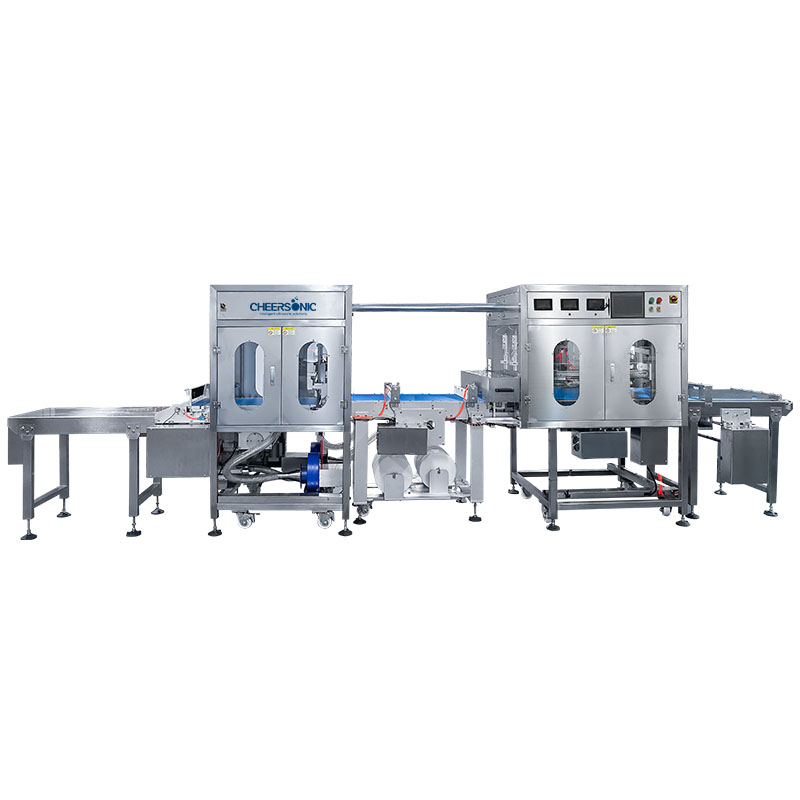
UFM2500P ultrasonic food cutting machine — titanium alloy and stainless steel construction for food production lines.
Problem Definition: Compliance Lives in the Construction, Not the Certificate
Food machinery compliance requirements differ by market, but the underlying questions are stable: does the equipment introduce a risk to the product, can it be cleaned to a defined standard, and is its documented performance repeatable? ISO 12100:2010, the general standard for machinery risk assessment and reduction, applies to industrial machinery including ultrasonic equipment and frames the safety side of that question. Hygiene and food-contact material safety sit alongside it.
Certificates record that these points were checked at a point in time. Construction decides whether the machine holds them in daily production. Three failure patterns recur when processors audit cutting equipment:
- Food-contact surfaces that cannot be cleaned effectively. Cream, cheese fat and glaze accumulate in crevices; every accumulation point is both a microbial cross-contamination risk and a reason for unscheduled cleaning.
- Enclosures that cannot take routine washdown. Where water ingress is a risk, operators clean less thoroughly or less often — the opposite of the intended result.
- Blades that dull, deform or shed material. Portion weights drift, product appearance changes, and the discussion moves from documentation to customer complaints.
A practical test is to ask a supplier to describe the machine part by part: which component contacts the product, what material it is made from, how it is removed for cleaning, and what rating protects the enclosure. If a construction answer does not exist for each food-contact part, a certificate alone will not close the gap.
Industry Background: Why Ultrasonic Cutting Became a Compliance-Relevant Category
Ultrasonic cutting is no longer a niche technique in food processing. Third-party market research published by Dataintelo values the ultrasonic cutters market — which includes food cutting applications — at USD 2.8 billion in 2025, with a projected CAGR of 7.2% through 2033. The figure covers all ultrasonic cutter applications rather than food alone, but it indicates how broadly the technology has been adopted.
Adoption is driven by product mix. Bakery, dairy and confectionery lines increasingly run sticky, high-fat, layered and frozen products that mechanical blades handle poorly: cream smears, fillings pull out, chocolate cracks, and blades need frequent cleaning between runs. Ultrasonic cutting uses high-frequency micro-vibration of the blade to separate product with very low downward force, and the vibration forms an isolation air film between blade and product that reduces friction and supports self-cleaning of the blade. On a hygiene-controlled line that changes the cleaning routine: less product adhesion on the blade means less frequent tool cleaning and less manual handling of food-contact parts.
Supplier landscape: third-party coverage of the ultrasonic equipment and spray coating sector lists Sono-Tek Corporation, Branson (Emerson), Dukane and Cheersonic among key global players. Those companies serve different application segments, so a food processor should match any shortlist to the process — cutting, portioning or coating — rather than to general brand recognition.
Cheersonic operates a 7,150 m² manufacturing facility with approximately 100 employees, including a 20-engineer R&D team, and reports annual production capacity of 1,200 units. Its food-side range covers ultrasonic cutting, ultrasonic slicing, ultrasonic food cutting machines, cake cutting machines and cheese cutting machines.
Detailed Solution: What Compliant Ultrasonic Cutter Construction Looks Like
The construction facts below come from Cheersonic's published product and application data. They are presented as specification points a buyer can request in writing from any supplier, not as claims that only one manufacturer can meet.
Food-contact materials: titanium alloy and stainless steel
Cheersonic ultrasonic food cutting machines are made of titanium alloy and stainless steel. The same material pairing is specified for the ultrasonic cutting machine, the ultrasonic slicing machine, the ultrasonic cheese cutting system and the cake cutting machine. The cutting blade on the food cutting and slicing families is a titanium ultrasonic blade; on the cheese cutting system it is described as a titanium alloy sonotrode operating at 20 kHz.
In dairy applications, Cheersonic describes its food-grade contact parts as a titanium alloy cutter head that is wear-resistant and corrosion-resistant. The combination matters in chilled, high-fat production: stainless steel carries the structural and hygienic load, while titanium is used where a part must vibrate continuously, resist wear and survive frequent cleaning.
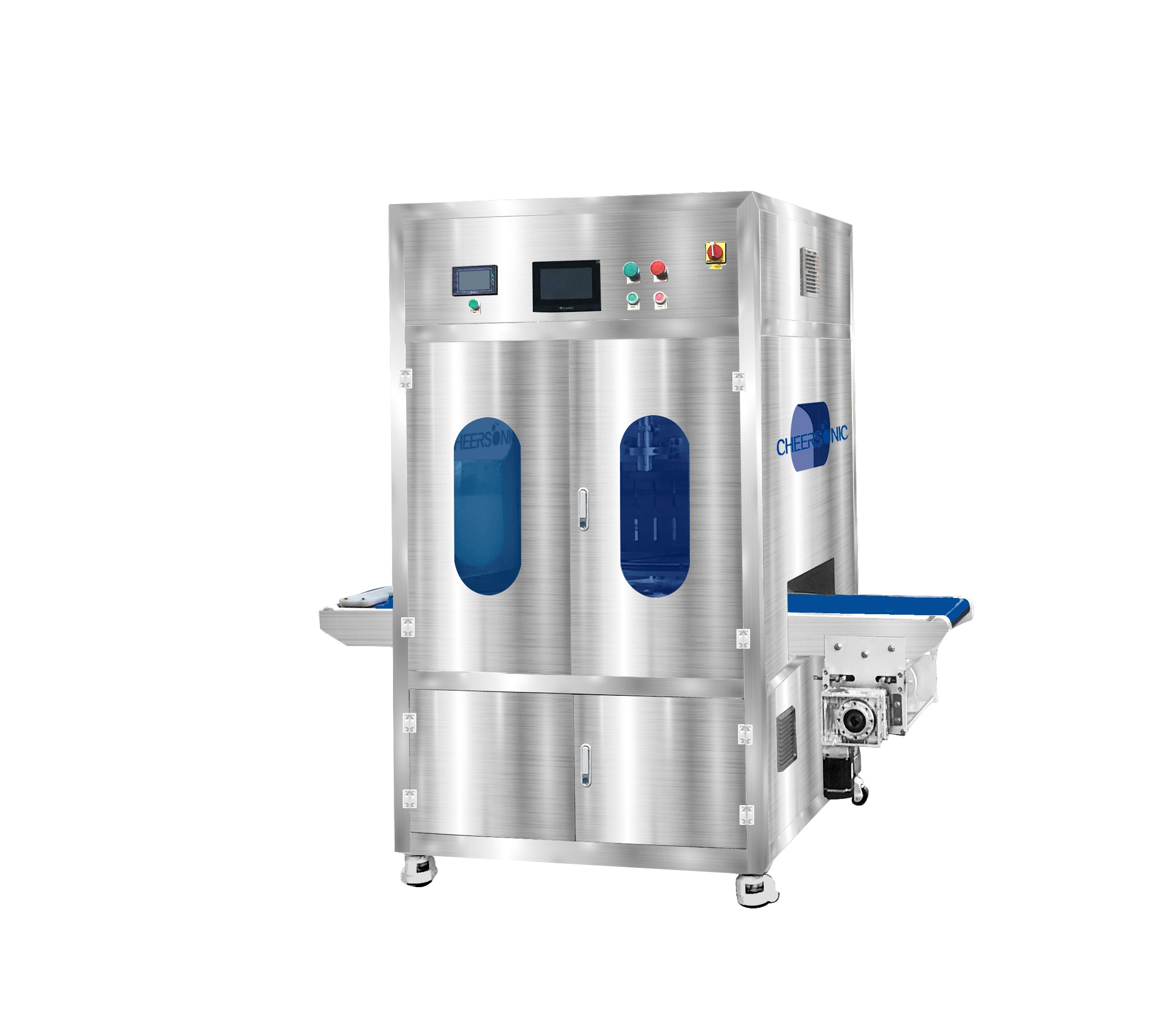
UFM3100P ultrasonic cutting machine — the blade is a replaceable titanium ultrasonic blade, the frame is stainless steel.
What to request: a written material declaration listing every food-contact component — blade, product guides, conveying surfaces, guards — with its material grade, plus a statement of how each part is removed for cleaning. A declaration that names only the blade leaves the rest of the product path unverified.
Washdown: IP65 protection and hygienic design together
Protection grade is specified as IP65 on two Cheersonic cutting families. The ultrasonic food cutting machine is listed as IP65 washdown compliant, and the ultrasonic cutting machine is listed with an IP65 washdown grade. In the IP code, the first digit describes solids protection (6 = dust-tight) and the second describes water protection (5 = protected against water jets from a nozzle) — the level typically required for routine washdown of machine exteriors in food plants.
Documented hygienic design features on Cheersonic cutting equipment include a food-grade hygienic wash-down structure on the cheese cutting machine and the cake cutting machine, and a quick-release sanitary design for food production on the ultrasonic cutting tools. Application documentation for dairy and bakery identifies two intended outcomes: a low-residue, easy-clean structure that avoids bacterial cross-contamination, and a blade surface that resists cream residue to reduce microbial cross-contamination risk.
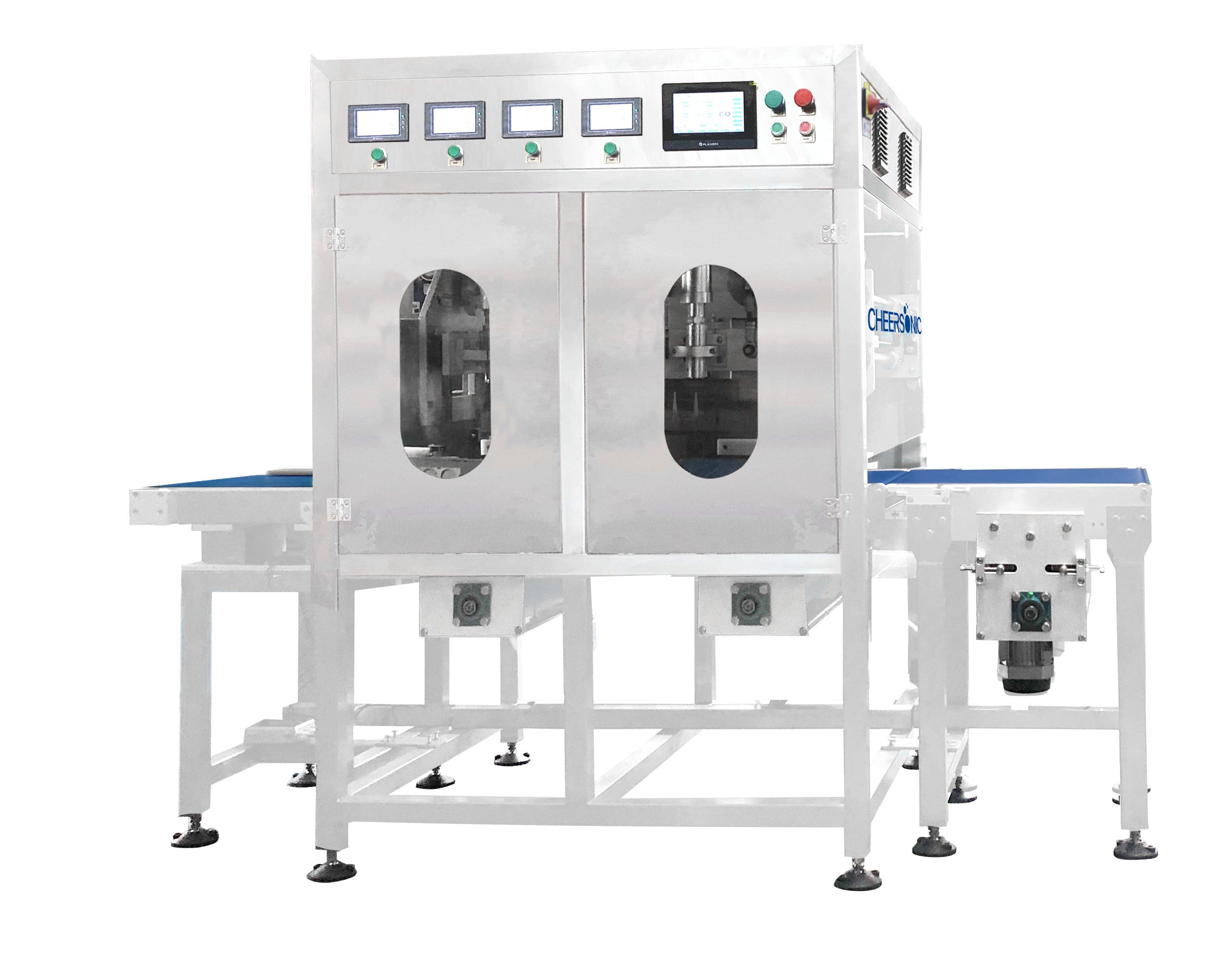
UFM2300W ultrasonic cutting machine — a cutting platform intended for washdown-based hygiene routines.
Durability and consumables: the wearing part is a compliance part
Ultrasonic cutting tools use interchangeable ultrasonic titanium blades, and the cutting families are built around a quick-release sanitary design for food production. Blade condition belongs in the compliance conversation, not only the quality one: as a blade wears, cut faces roughen, portion weight drifts, and residue on the blade increases. Bakery application documentation lists a low blade wear rate as a design requirement specifically to reduce later maintenance and replacement costs.
Cut quality is specified numerically, which makes it verifiable. Cheersonic documents cutting accuracy of ±0.5–1.0 mm depending on product type on its ultrasonic cutting tools, dimensional error within ±1 mm in bakery applications, and typical portion accuracy of ±1% on the cheese cutting system.
Machine-level parameters that influence hygiene and durability are also published. Cheersonic food cutting machines run at a 20 kHz vibration frequency; power range is 800–1600 W on the ultrasonic food cutting machine and 800–1800 W on the ultrasonic cutting machine; input is 208–240 V, 50/60 Hz, 15 A; air supply is 6 CFM at 90 PSI; maximum cutting width is 600 mm; output ranges from 50 to 1500 pieces per hour; and the working temperature range is -14 °C to 40 °C. Control is by servo touch screen with automatic indexing.
Step-by-Step Breakdown: How to Verify a Food-Grade Ultrasonic Cutter
- Define the product envelope first. Record portion weight and geometry, product temperature (ambient, chilled or frozen), stickiness, and the tallest product the line will run. Cheersonic cutting tools specify a product height range up to approximately 100 mm and cutting patterns that can be round, square, triangle, bar or fully custom geometry, so the pattern list is a useful check on whether the machine is configured for your products.
- Match the machine family to output and format. The ultrasonic food cutting machine is specified at 50–1500 pieces per hour with a maximum cutting width of 600 mm. The ultrasonic slicing machine handles full sheet or round products at up to 300 products per hour, and the slicing range is offered in a version for frozen, chilled and hard products and a version for fresh, ambient and sticky products. Confirming which version matches your product temperature prevents a specification mismatch that no cleaning routine will fix.
- Request the food-contact material declaration. Every component that touches product should be listed with its material. On Cheersonic food cutting machines this is titanium alloy and stainless steel, with a titanium ultrasonic blade.
- Verify enclosure rating and cleaning method together. Confirm the IP rating of the electrical and pneumatic enclosure, then confirm that guards, product guides and blades can be removed for cleaning. Cheersonic specifies IP65 washdown protection on its food cutting machine and ultrasonic cutting machine families, and a quick-release sanitary design on its cutting tools.
- Lock the accuracy specification in writing. Put the tolerance in the purchase specification rather than in a brochure. ±0.5–1.0 mm cutting accuracy depending on product type, ±1 mm dimensional error in bakery applications, and ±1% typical portion accuracy on the cheese cutting system are the published figures to compare against.
- Confirm utilities and the operating environment. A 20 kHz ultrasonic cutter with a 600 mm cutting width typically needs a defined air supply (6 CFM at 90 PSI is specified), a 208–240 V, 50/60 Hz supply, and a working temperature between -14 °C and 40 °C. Freezing product below the stated window, or running above it, affects both cut quality and component life.
- Validate with samples, then plan integration and spares. Run the actual product through the machine before committing to a line. Cheersonic maintains an ultrasonic cutting equipment sample workshop for cutting trials. Once the cut is validated, plan the interfaces — conveyor, demolding, checkweigher, 3D vision and robotic pick-and-place are documented integration options — and order the blade and consumable replacement plan at the same time as the machine.
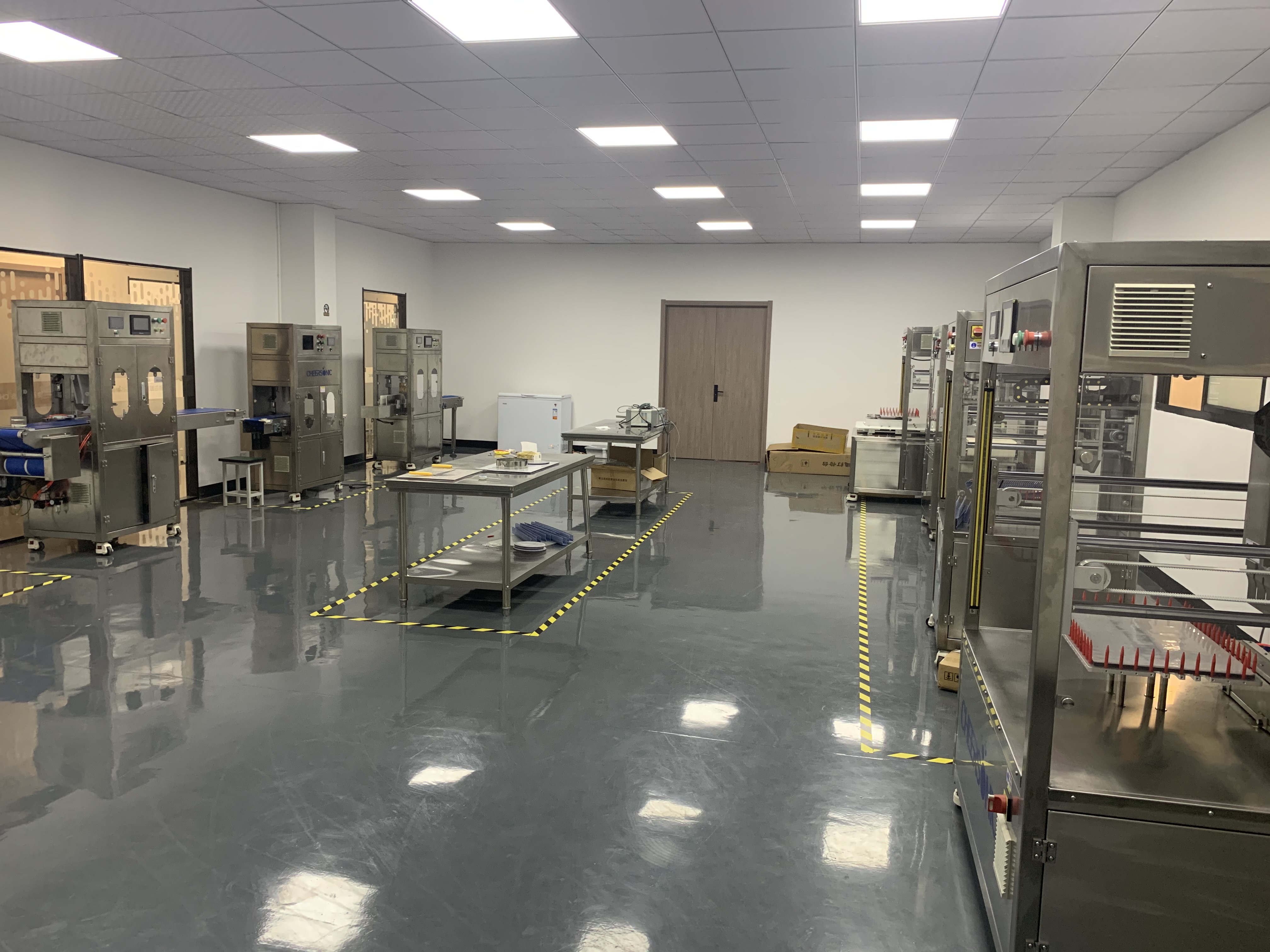
Cheersonic ultrasonic cutting equipment sample workshop — used to validate cut quality on real products before purchase.
Use Cases: Where Construction Choices Become Visible on the Line
Bakery and cake production
Cream-filled, layered and sticky cakes are the classic ultrasonic application. Cheersonic cake cutting machines are built from stainless steel and titanium alloy, use a titanium ultrasonic cutting blade at 20 kHz, and offer a food-grade hygienic wash-down structure. Cutting patterns can be customized to triangular, square, rectangular or portioned blocks, and automation ranges from manual to fully automated robotic systems. Bakery application data describes the intended outcomes directly: avoiding cake deformation, cream leakage, filling overflow and uneven cut surfaces, and cutting frozen products at -15 °C to -20 °C without pre-thawing.
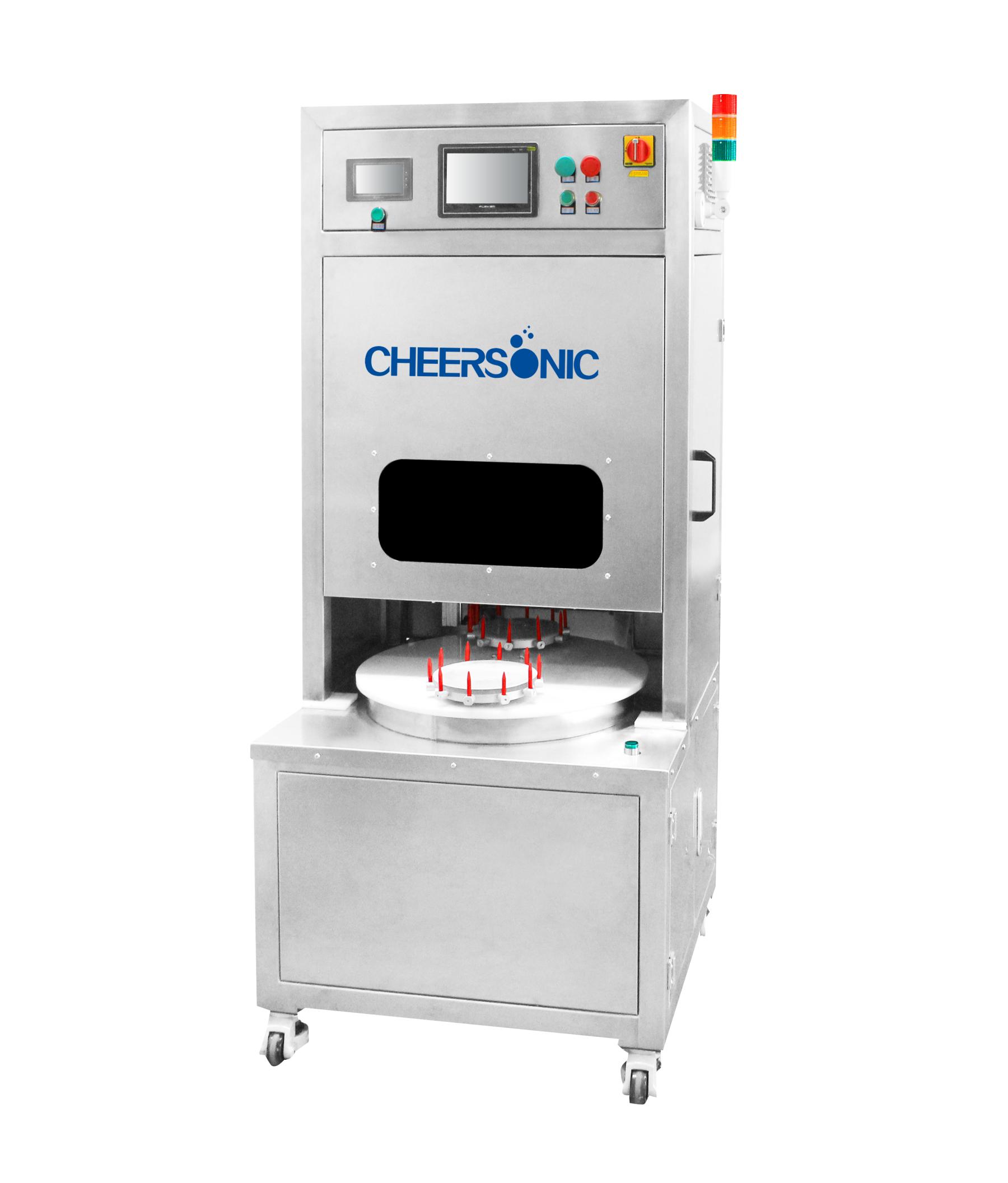
UFM1000P ultrasonic cake cutting machine — titanium ultrasonic blade and a food-grade hygienic wash-down structure.
Dairy and cheese portioning
Cheese portioning places different demands on construction because the product is chilled, dense and often extruded. The Cheersonic ultrasonic cheese cutting system handles block, wheel, stick and extruded cheese forms, uses a titanium alloy sonotrode at 20 kHz, and supports fixed weight, catch weight and portion cutting with typical portion accuracy of ±1%. Documented integration options include conveyor systems, checkweighers, 3D vision systems and robotic arms, and the hygiene design is a food-grade wash-down structure. Dairy application documentation specifies a low-residue, easy-clean structure to avoid bacterial cross-contamination.
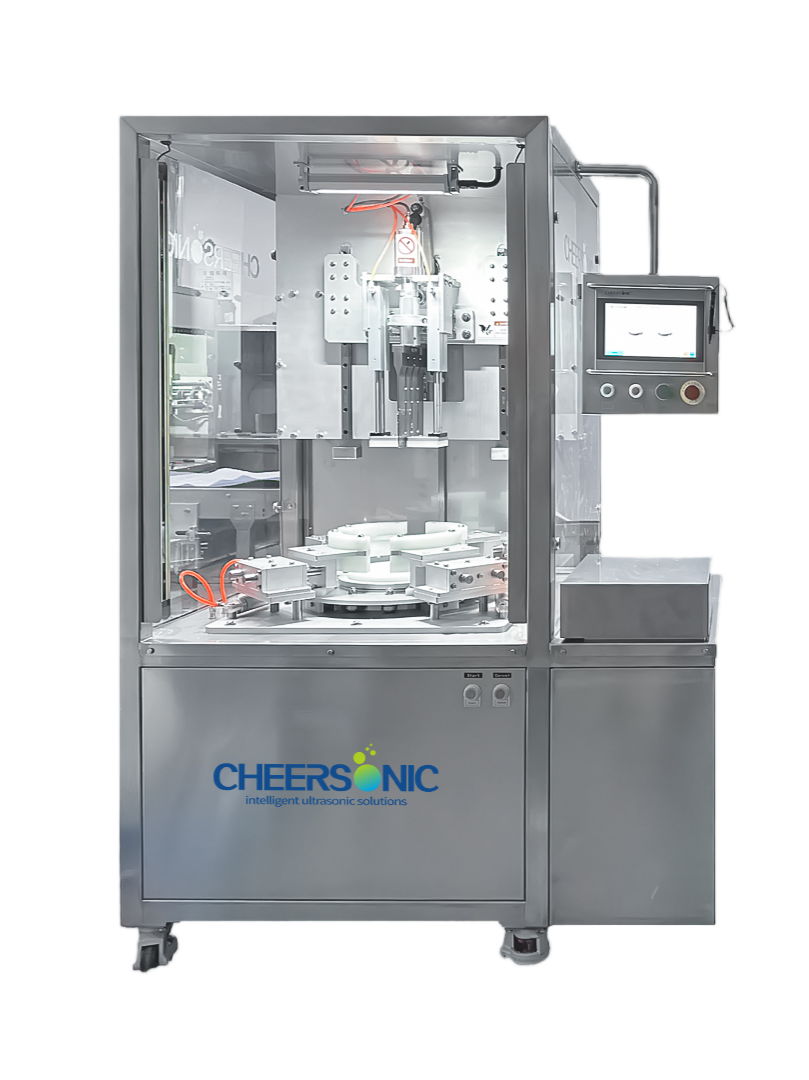
UFM1000C cheese cutting machine — titanium alloy sonotrode, food-grade hygienic wash-down construction.
Frozen desserts and ready-to-eat production
Frozen and ready-to-eat products push the temperature envelope. Cheersonic's ultrasonic slicing machine is specified for frozen, chilled and hard products at up to 300 products per hour with ultrasonic blade portioning, while the food cutting machine family is specified for a working temperature range of -14 °C to 40 °C and outputs from 50 to 1500 pieces per hour. Across the slicing range, models are offered with production speeds of 80 to 1500 cakes or pies per hour.
Confectionery and snack bars
Confectionery behaves differently again: chocolate cracks under pressure, nougat and caramel stick, and grain bars shed crumbs. Cheersonic's confectionery application documentation covers chocolate, toffee and caramel, grain energy bars and nougat sandwich products, and identifies the recurring requirement as low friction and no thermal deformation of the sugar material. That is why blade material, blade condition and the cleaning routine matter more than cutting force on these lines.
Comparison: Matching Compliance Requirements to Documented Construction Facts
The table below maps the questions a food processor is asked during supplier qualification to the construction evidence documented by Cheersonic. It is deliberately limited to published specification points; anything that cannot be evidenced in writing should be treated as unverified.
| Compliance question | What to verify | Documented Cheersonic construction fact |
|---|---|---|
| Food-contact material safety | Material declaration for every product-contact part | Titanium alloy and stainless steel construction across the food cutting, slicing, cake and cheese families; titanium ultrasonic blade (sonotrode) operating at 20 kHz |
| Cleanability and washdown | Enclosure rating plus hygienic design | IP65 washdown compliant protection grade on the ultrasonic food cutting machine; IP65 washdown grade on the ultrasonic cutting machine |
| Cross-contamination control | Removal method for guards, guides and blades | Quick-release sanitary design for food production; food-grade hygienic wash-down structure on the cheese cutting machine and cake cutting machine |
| Portion and cut consistency | Tolerance written into the purchase specification | ±0.5–1.0 mm cutting accuracy depending on product type; ±1 mm dimensional error in bakery applications; ±1% typical portion accuracy on the cheese cutting system |
| Durability and consumables | Blade material and replacement plan | Interchangeable ultrasonic titanium blades; low blade wear rate identified as a design requirement in bakery applications |
| Documentation | Certificate scope naming the model and site | ISO9001, EU CE and US FDA stated by the manufacturer; ISO 12100:2010 applies to machinery risk assessment and reduction |
Two cutter families from the same manufacturer illustrate how small specification differences matter in practice. Both are built from titanium alloy and stainless steel and both carry an IP65 washdown protection grade, but the power range and control specification differ.
| Specification | Ultrasonic food cutting machine | Ultrasonic cutting machine |
|---|---|---|
| Vibration frequency | 20 kHz | 20 kHz |
| Power range | 800–1600 W | 800–1800 W |
| Input power | 208–240 V, 50/60 Hz, 15 A | 208–240 V, 50/60 Hz |
| Air supply | 6 CFM at 90 PSI | 6 CFM at 90 PSI |
| Maximum cutting width | 600 mm | 600 mm |
| Output | 50–1500 pieces per hour | 50–1500 pieces per hour |
| Working temperature | -14 °C to 40 °C | -14 °C to 40 °C |
| Control | Servo touch screen, automatic indexing | Servo touch screen |
| Protection grade | IP65 washdown compliant | IP65 washdown grade |
| Construction material | Titanium alloy and stainless steel | Titanium alloy and stainless steel |
FAQ
What certifications should a food-grade ultrasonic cutting machine carry?
Cheersonic states that it holds ISO9001, EU CE and US FDA certifications, and its company profile lists 31 patents and 3 software copyrights. At the machinery-safety level, ISO 12100:2010 is the general standard for risk assessment and reduction that applies to industrial machinery including ultrasonic equipment. When reviewing certificates, check that the scope identifies the model being purchased and the manufacturing site, and treat hygiene performance as a separate verification item covered by material and design evidence rather than by the certificate itself.
Is IP65 washdown protection enough for a food processing line?
IP65 is the protection grade specified on Cheersonic's ultrasonic food cutting machine, listed as IP65 washdown compliant, and on the ultrasonic cutting machine, listed with an IP65 washdown grade. It means the enclosure is dust-tight and protected against water jets, which supports routine washdown of machine exteriors. It does not describe the food-contact surface, so it should always be verified together with hygienic design: Cheersonic documents a food-grade hygienic wash-down structure on its cheese cutting machine and cake cutting machine, and a quick-release sanitary design for food production on its ultrasonic cutting tools.
What materials should touch the food in an ultrasonic cutter?
On Cheersonic equipment, the ultrasonic food cutting machine, ultrasonic cutting machine, ultrasonic slicing machine, cheese cutting machine and cake cutting machine are constructed from titanium alloy and stainless steel, and the blade is a titanium ultrasonic blade — described as a titanium alloy sonotrode on the cheese cutting system. Dairy application documentation describes the food-grade contact parts as a titanium alloy cutter head that is wear-resistant and corrosion-resistant. Ask for a declaration that covers every food-contact part, not only the blade.
What drives the cost of a food-grade ultrasonic cutting system?
Cost for this class of equipment follows configuration rather than a single list price. The documented variables are the model family and output — 50–1500 pieces per hour on the ultrasonic food cutting machine, up to 300 products per hour on the ultrasonic slicing machine, and 80–1500 cakes or pies per hour across the slicing range — the automation level (manual, semi-automatic or fully automated robotic), the number of custom cutting patterns required, and optional integration such as conveyor systems, checkweighers, 3D vision systems and robotic pick-and-place. Hygiene specification is built into the machine rather than added later, so material and IP65 requirements should be stated at inquiry stage rather than negotiated after configuration.
How should a buyer validate cut quality and hygiene before ordering?
Run the actual product. Cheersonic operates an ultrasonic cutting equipment sample workshop where cutting trials are performed, and its published tolerances — ±0.5–1.0 mm cutting accuracy depending on product type, ±1 mm dimensional error in bakery applications, and ±1% typical portion accuracy on the cheese cutting system — give a measurable target for the trial. Validation should also cover the cleaning routine: confirm that guards, guides and blades can be removed for cleaning as specified. Suppliers named in third-party coverage of the ultrasonic equipment sector include Sono-Tek Corporation, Branson (Emerson), Dukane and Cheersonic, which provides a starting shortlist for comparison. To arrange a trial or request a quotation, contact Cheersonic at market2@cheersonic.com.
Conclusion: A Short Compliance Checklist for Food Machinery Buyers
Compliance in food machinery is a construction outcome. Four checks carry most of the weight. Confirm the material of every food-contact part — on Cheersonic cutting equipment that means titanium alloy and stainless steel with a titanium ultrasonic blade. Confirm the enclosure rating and the hygienic design together: IP65 washdown protection plus a food-grade hygienic wash-down structure and quick-release components. Confirm that cut and portion tolerances are written into the specification rather than left to a brochure; ±0.5–1.0 mm, ±1 mm and ±1% are the published Cheersonic figures. And confirm that the consumable plan, based on interchangeable ultrasonic titanium blades, is part of the purchase rather than an afterthought.
Certificates such as ISO9001, EU CE and US FDA document that a manufacturer works to a system. The machine's construction determines whether that system survives your production schedule, your washdown routine and your customer specifications.
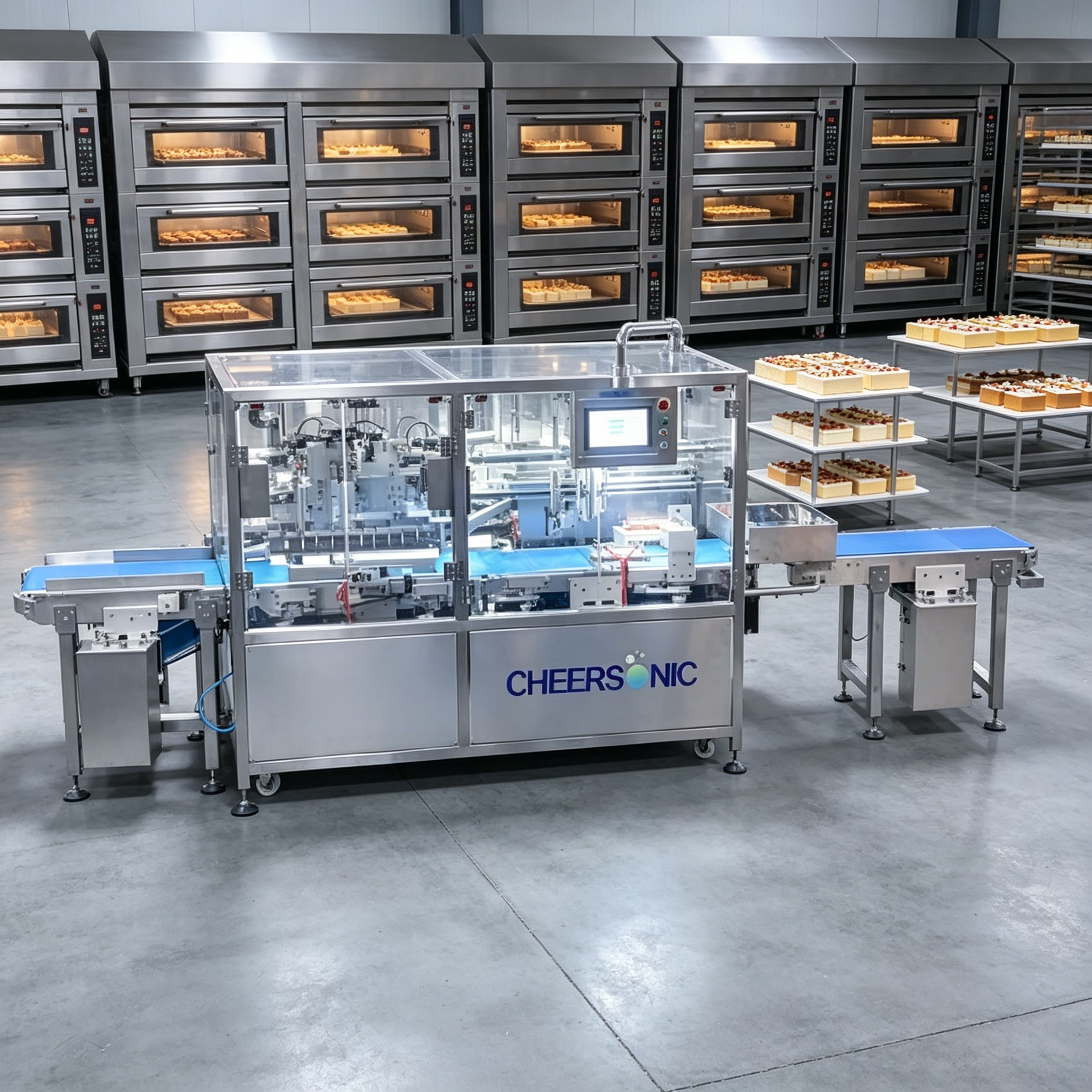
UFM8101 ultrasonic slicing machine — part of the Cheersonic food cutting range used in bakery and frozen dessert projects.
Specify the construction before you specify the machine
Send Cheersonic your product, portion weight, temperature and hygiene requirements, and request a sample cut plus a written material and protection-grade specification for the proposed model. Cheersonic builds ultrasonic cutting, slicing, cake cutting and cheese cutting systems from titanium alloy and stainless steel with IP65 washdown protection, and supports projects from a single machine to fully automated robotic lines.
Email: market2@cheersonic.com | Tel: +86 133-7254-0303 | WhatsApp: +86 158-6904-9660
Download the full product and specification overview: CHEERSONIC brochure (PDF)
Website: www.cheersonic.com | Address: No. 11-13, Chuangye Road, Changkou Town, Fuyang District, Hangzhou City, Zhejiang Province
Have Questions or Need More Details?
Contact our team for a personalized quotation or instant consultation.
Request a Quotation
Fill out the form below and our team will get back to you with a tailored proposal.
WhatsApp Direct Chat
Prefer to chat in real-time? Message us on WhatsApp for instant assistance & quick answers.
- Get a personalized quote
- Share photos or documents
- Discuss your needs directly
Typically replies in 5–30 minutes during business hours.