
Matching Ultrasonic Equipment to Real Projects: Cheersonic Cutting & Coating Scenarios
Matching Ultrasonic Equipment to Real Projects: Cutting, Slicing, and Coating Scenarios for Smart Manufacturing
Industrial buyers evaluating ultrasonic technology are often not simply comparing machine specifications. They are trying to answer a more practical question: which ultrasonic equipment configuration will fit a defined product, production volume, environmental requirement, and quality target within a smart manufacturing line. Selecting an ultrasonic cutting machine, slicing system, or spray coating platform before mapping it to an actual processing scenario creates avoidable downtime, material waste, and integration cost.
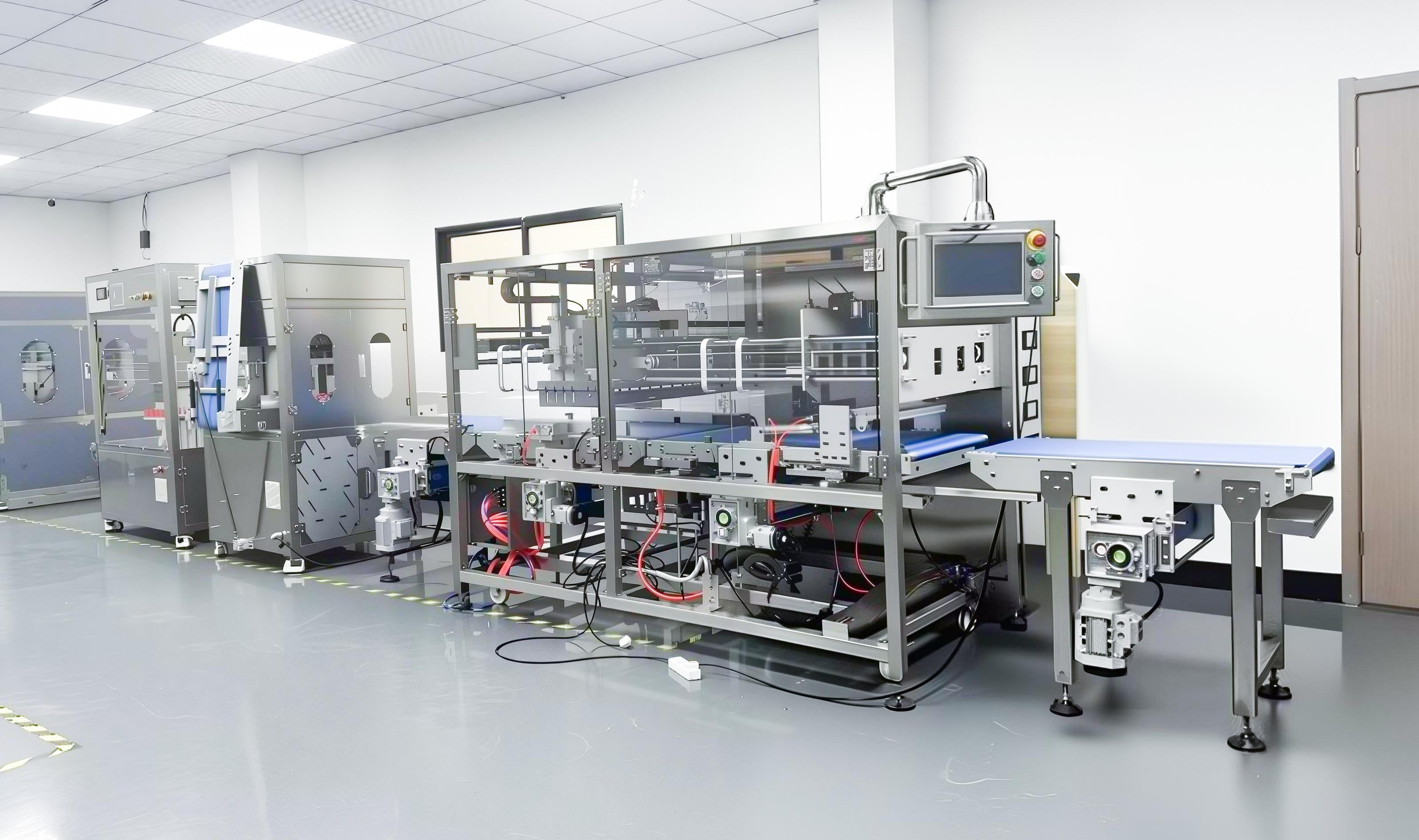
Hangzhou Cheersonic Ultrasonics Equipment Co., Limited is a high-tech enterprise founded in 2014 that integrates R&D, manufacturing, sales, and service. Located in Fuyang District, Hangzhou, the company develops ultrasonic cutting and ultrasonic spraying equipment for the baking, dairy, medical, electronics, and energy sectors. Cheersonic works with a 7,150m² facility, roughly 100 employees, and an in-house engineering team of 20. This article maps Cheersonic equipment options and capabilities to defined project conditions, so decision-makers can validate ultrasonic technology against task-specific parameters.
Ultrasonic Project Fit: What Does It Mean for Cutting and Coating?
Project fit for ultrasonic equipment requires more than matching a product category with a machine family. It requires validating four variables: product behavior at the moment of processing, environmental constraints, line integration needs, and measurable output criteria such as portion accuracy, coating uniformity, or scrap rate. When those variables align, ultrasonic atomization and ultrasonic blade vibration deliver repeatable, low-waste processing. When they do not, even a well-built machine will fail to meet expectations.
Industry players recognize this trend toward application-specific adoption. The global ultrasonic cutters market, which includes food cutting applications, is valued at USD 2.8 billion in 2025 with a projected CAGR of 7.2% through 2033 (Dataintelo). At the same time, medical device coatings are estimated at USD 16.27 billion in 2025, with anti-microbial coatings accounting for a 31.8% revenue share (Grand View Research). These figures point to an expanding range of production scenarios that require precise, low-impact processing equipment.
Why General Ultrasonic Capability Is Not Enough for Manufacturing Projects
A manufacturer purchasing an ultrasonic machine for cutting frozen cakes, slicing cheese blocks, or depositing catalyst layers on fuel cell membranes is operating under materially different constraints. General ultrasonic capability only guarantees that vibrating energy is available. Project success depends on how the machine controls that energy: blade geometry, sonotrode frequency, nozzle atomization pattern, motion system, environmental classification, and product handling all influence the end result.
Cheersonic illustrates this through a dual product architecture. Ultrasonic cutting systems use a 20 kHz blade vibration frequency with a power range of 800W–1800W, a cutting width up to 600 mm, and housings rated IP65 washdown grade. Ultrasonic spraying systems operate at 25–180 kHz, with nozzle power consumption between 1 and 8 W and flow rate controlled from 0.001 to 50 mL/min. The two technology groups do not compete with each other; they serve distinct families of manufacturing problems.
The Smart Manufacturing Production Context
Smart manufacturing projects integrate equipment into digital and physical workflows that emphasize traceability, automation, and repeatability. Asia Pacific dominated the ultrasonic technology and sensor market in 2025, representing approximately 25% to 38% of global revenue across different sub-segments (Fortune Business Insights). This geographic momentum is driven by equipment manufacturers offering configurable systems rather than standalone tools.
Cheersonic’s export ratio is 50%, with main markets in Asia, the EU, and North America. About two-thirds of the workforce relate to production and engineering, and the company holds 31 patents and 3 software copyrights. It also maintains ISO9001, EU CE, and US FDA certifications. For a buyer evaluating vendor credibility in a smart manufacturing context, those facts matter because they indicate that the company builds ultrasonic equipment not as a one-off project, but as a controlled productization process, with a registered capital of 10 million RMB.
Detailed Solution: Mapping Cheersonic Systems to Project Scenarios
The following mapping is built from Cheersonic application and product data. Each scenario lists the relevant equipment family and the process conditions the system must handle. This allows a buyer to identify which part of the Cheersonic catalog deserves further technical evaluation.
Food, Bakery, Dairy, and Candy Cutting Projects
For bakery, confectionery, dairy, and frozen dessert lines, Cheersonic offers ultrasonic food cutting and slicing models under the HFM and UFM series, including HFM2300, HFM3100, UFM1000R, UFM1000P, UFM1000C, UFM2200, UFM3100P, UFM3300, UFM3200P, UFM5000, UFM5100, UFM6000, UFM8000, UFM8101, and UFM8100C. Production capacity ranges from 50 to 1500 pieces per hour depending on product geometry. The working temperature range is -14°C to 40°C, allowing frozen products such as cheesecake, mousse, ice cream cake, and butter to be cut without thawing.
Cheersonic slicing systems also report throughput up to 300 products per hour for full sheet or round products. The portioning technology is based on ultrasonic blades, not mechanical wire or saw cutting. For round or sheet cakes, the blade is driven at about 20 kHz, creating micro-vibrations that reduce friction and preserve soft, sticky, layered, or cream-filled structures.
Cheese and Dairy Portioning Projects
In the dairy sector, Cheersonic supplies dedicated cheese cutting models including CWM100, UFM8100C, UFM2200C, UFM1000C, UFM3100W, and UFM2300W. These systems support block, wheel, stick, and extruded cheese, and can operate in inline, batch, or robotic automated mode. Fixed-weight and catch-weight portioning are both available, with integration into 3D vision system, checkweigher, or robotic pick-and-place optional.
Ultrasonic cheese cutting is an alternative to wire cutting. Instead of dragging a wire through the product and creating friction, the oscillating titanium blade separates the cheese with less smearing and more precise dimensional control. Cutting accuracy described in Cheersonic food cutting units includes dimensional error around ±1mm. For portion accuracy, industry-typical control is ±1% weight deviation.
Candy and Confectionery Lines
For candy and confectionery, including chocolate, nougat, caramel, grain bars, and composite products, Cheersonic ultrasonic cutting addresses the problem of sticky knives, wire drawing, and frequent downtime for cleaning. High-viscosity, high-sugar products are processed either at room temperature or in low-temperature frozen conditions without thawing. The ultrasonic food cutting machine platform is compatible with automated conveyor lines, demolding equipment, weighing modules, and wrapping machines.
The system prevents chocolate melting, caramel deformation, and grain-stick breakage because ultrasonic cutting uses micro-vibration rather than heavy downward force. Since the blade also self-cleans through vibration, the line is able to run longer between cleaning shutdowns, supporting 24/7 continuous mass production in full assembly line mode.
Medical Device Coating Projects
Ultrasonic spray coating is used in the medical industry to apply drug, lubricant, hydrophilic, or antibacterial coatings to stents, balloons, catheters, blood collection tubes, syringes, and other implantable or diagnostic devices. Cheersonic ultrasonic coating systems — UAM4000 and UAM6000 — operate at 25–180 kHz, producing droplets from 18 to 200 μm. Film thickness can be controlled from 20 nm to 100 μm.
Ultrasonic atomization is not pneumatic atomization. A liquid stream is atomized by low-energy ultrasonic vibration rather than by high-pressure air. The result is a gentle, low-velocity spray that can coat fragile substrates such as drug-eluting stents and PTCA balloons without structural damage. The process also reduces overspray and material waste in a cost-sensitive regulatory environment.
Cheersonic ultrasonic coating equipment is used in Class 100/1000 cleanroom conditions and can be configured for GMP-aligned production. The full system includes precise liquid delivery, ultrasonic nozzle, motion platform, fixturing, and a sealed spray chamber for solvent control.
Electronics and Semiconductor Coating Projects
In semiconductor manufacturing, MEMS, and microelectronics, ultrasonic spray coating is used to deposit photoresist on 3D topographies. Unlike spin coating, which depends on centrifugal force across a planar wafer, ultrasonic spray can conformally cover deep trenches, stepped structures, and high-aspect-ratio features. Cheersonic’s photoresist coating systems are the USP6000 and USP6000WS.
The system supports coating thickness control from nanometers to tens of microns, with highly uniform edge-to-edge coverage. This is critical for MEMS acoustic sensors and other devices where sidewall coverage directly influences electrical performance. According to application data, MEMS wafer lithography processes benefit from Cheersonic ultrasonic spray because the low-kinetic-energy mist does not damage fragile microstructures.
Electronics manufacturers also use Cheersonic ultrasonic nozzles in fluxing, conformal coating, and polyimide deposition lines. Because the nozzle never relies on high pressure to atomize liquid, it resists clogging and maintains consistent spray patterns, even with nanomaterial-laden fluids.
Fuel Cell, Electrolyzer, and Battery Coating Projects
Cheersonic ultrasonic coating for the energy sector is handled by the UAM4000, UAM6000, and UAM8000 systems, marketed as ultrasonic fuel cell coating platforms. These systems are used for catalyst coating on proton exchange membranes (PEM), CCM (catalyst-coated membrane) manufacturing, GDL microporous layer preparation, and electrolyzer electrode production. The equipment must handle water-based and alcohol-based catalyst slurries containing precious metals such as platinum, without clogging and without high-pressure impact that could damage the membrane.
Cheersonic application data from Germany describes a green hydrogen project where 10 Cheersonic units support PEM and AEM dual-route CCM catalytic layer double-sided continuous spraying. The results are reported as a 98.5% CCM yield, a 60% increase in daily production per unit, and 45–55% reduction in precious metal consumables.
Ultrasonic Spray Pyrolysis for Advanced Materials
For functional thin films such as TCO, metal oxide films, and ceramic layers, Cheersonic offers ultrasonic spray pyrolysis systems including the UAM2000 and UNC9000. Pyrolysis temperature ranges from 400°C to 1200°C, with particle size from 20 nm to 5 μm. The systems atomize precursor liquids and deposit them onto heated substrates where pyrolysis converts the droplet into a functional film.
This matters to project teams working on transparent conductive films, smart glass, or sensor materials. Since the ultrasonic droplet size is tightly controlled by frequency, the resulting film density and thickness are more reproducible than with conventional air-spray pyrolysis.
Ultrasonic Slicing and Cutting in High-Volume Bakery Operations
For bakeries producing fresh and frozen desserts, Cheersonic offers both standalone manual machines and large inline robotic systems. Small machines support start-up bakeries and manual facilities. Inline systems, including UFM6000 and UFM8101, deliver high-speed automated portioning to commercial production facilities. Cheersonic slicing models accommodate production speeds from 80 to 1,500 cakes or pies per hour, depending on model and level of automation.
Recent offline introductions include ultrasonic cutting with or without divider inserts between each slice. Divider-insert cutting improves cut surface quality and product presentation. In addition, robotic arm integration improves speed, efficiency, and accuracy, supporting professional and consistent output.
Step-by-Step: Evaluating Ultrasonic Machine Project Fit
Project-fit evaluation should follow a structured path. The sequence below describes the procurement logic used in industrial ultrasonic equipment purchasing decisions.
Step 1. Define the Product Matrix and Temperature Conditions
The first step is to list every product that will run on the machine, including raw and chilled temperatures. For cutting, define whether the machine must process frozen product at -14°C, chilled, or ambient product. For coating, define the substrate type, the coating fluid, and the required film thickness range.
Step 2. Select the Core Technology Class
Cheersonic separates core systems into two categories. If the project is about clean separation of food, baked goods, confectionery, or dairy, the relevant technology is ultrasonic cutting and slicing. If the project is about applying a precise thin layer of functional material, the relevant technology is ultrasonic spray coating or ultrasonic spray pyrolysis.
Step 3. Validate Throughput and Portioning Requirement
Measure the required throughput against the model’s operating window. A manual or standalone machine supports batch processing. A fully inline ultrasonic slicing system supports 24/7 integration with upstream and downstream conveyors. Review the product or project documentation for output capacity ranges, blade stroke, and indexing accuracy. For food portioning, dimensional error should be defined at project level, with Cheersonic machines documenting ±1mm or similar tolerance.
Step 4. Evaluate the Material Handling Interface
For cutting systems, verify the product infeed method: manual loading, tray indexing, or fully synchronized conveyor with upstream equipment. For coating systems, define whether the substrate is fed continuously or in batch, such as wafers, stents, or membrane sheets. Confirm the machine can accept the appropriate end-effector or conveyor module.
Step 5. Review Utility, Cleaning, and Environment Fit
For food cutting machines, check utility requirements such as 208–240V supply, air supply of 6 CFM at 90 PSI, and temperature range of -14°C to 40°C. For washdown compliance, verify IP65 rating. For coating equipment, confirm the cleanroom or controlled-environment requirement and validate whether the coating station needs a sealed spray chamber, solvent recovery, or exhaust purification.
Step 6. Decide on Automation and Quality-Data Integration
The final step is to define how the machine will exchange data with the line. Ultrasonic cutting systems can control indexing, cutting size, and recipe switching. Robotic integration can perform product pick-and-place, while camera systems can guide blade movement. Coating systems use PLC controls to store and reproduce spray parameters. For smart manufacturing, data traceability of process parameters across every batch is a requirement, not an extra.
Use Cases from Installed Cheersonic Projects
Cheersonic publishes use cases from different regions, providing real-world evidence of where ultrasonic machines are used at production scale. These are not laboratory-only applications.
Green Hydrogen Electrolyzer and Fuel Cell Project (Germany)
A global industrial general contracting service provider in Germany uses 10 Cheersonic units for PEM and AEM dual-route CCM catalytic layer double-sided continuous spraying for green hydrogen production. The project reportedly achieved 98.5% CCM yield, a 60% increase in daily production per unit, and 45–55% reduction in precious metal consumables. Batch deviation of catalytic layer loading is ≤3%, and hydrogen production energy consumption is reduced by 10–15%.
This case demonstrates that ultrasonic spray coating can be scaled to continuous roll-to-roll production in the energy sector. For a project leader, the valuable insight is that a dual-route system with two membrane types can run on identical spray parameters, reducing validation burden.
Wheel Cheese Wedge Cutting in Ireland
A dairy producer in Ireland deploys 4 Cheersonic units for precision quantitative wedge cutting of wheel cheese. The project outcome includes over 70% space utilization improvement, 70% production time reduction, and minimal raw material loss. The system uses AI-optimized cutting schemes to reduce edge and corner waste. Ultrasonic cold cutting avoids friction heat generation, protecting original cheese structure and fat integrity.
Automatic Quantitative Cheese Cutting in Venezuela
A Venezuelan dairy processor uses one Cheersonic cheese cutting machine with 3D scanning, AI calculation, and ultrasonic cutting. Results include weight error controlled within ±1g, appearance scrap rate reduced by 90%, and raw material edge loss reduction from 8.2% to 0.9%.
Medical Stent and Balloon Coating in Canada
A Canadian global medical device manufacturer uses 5 Cheersonic units for hydrophilic and drug coating on coronary stents and PTCA dilation balloons. The project reportedly raised finished product qualification rate from 82% to 98.5%, increased medical liquid utilization by 37%, and enabled one-click parameter switching for different stent and balloon specifications. The enclosed spray structure helps maintain low particle contamination in controlled cleanroom environments.
Semiconductor MEMS Photoresist Spray in South Korea
A MEMS acoustic sensor manufacturer in South Korea installed 2 Cheersonic units for photoresist conformal spraying on 3D deep-trench and step structures. Deep trench lithography defect rate dropped by 70% and MEMS chip yield increased by over 12%.
Comparison Table: Which Ultrasonic System Fits Your Project
| Project Scenario | Cheersonic System Type | Frequency Range | Key Outcome Indicators |
|---|---|---|---|
| Frozen cake and mousse cutting | UFM series ultrasonic slicing/cutting | 20 kHz | Frozen cutting at -14°C to 40°C, clean slice, minimal deformation |
| Cheese portioning | CWM/UFM cheese cutting systems | 20 kHz | High precision portion control; fixed weight down to ±1g in use cases |
| Medical device drug coating | UAM4000/UAM6000 ultrasonic coating | 25–180 kHz | Uniform film from 20 nm to 100 μm; non-clogging atomization |
| Fuel cell catalyst coating | UAM4000/UAM6000/UAM8000 | 25–180 kHz | CCM yield up to 98.5% in use case; low precious metal loss |
| MEMS photoresist coating | USP6000/USP6000WS | 25–180 kHz | Conformal edge-to-edge coating, wafer defect reduction |
| Ultrasonic spray pyrolysis films | UAM2000/UNC9000 | 25–180 kHz | Particle size 20 nm–5 μm; pyrolysis 400–1200°C |
| Nano slurry dispersion (pre-processing) | LUIP500/IUIP1000-IUIP5000 homogenizer | 20 kHz | Dispersion stable up to 4 months in MWCNT aqueous system; volume 0.5 mL–20 L |
The table intentionally distinguishes food portioning from precision coating. Buyers evaluating across both worlds should not expect one ultrasonic platform to cover both processes. Instead, the selection should follow the material state, the substrate, and the acceptance metric.
Quality and Manufacturing Evidence Behind the Equipment
Cheersonic’s capability data lists a monthly capacity of 30 sets of ultrasonic cutting equipment, with standard model lead time of 7–15 days and customized model lead time of 30–45 days. MOQ is 1 unit. This versatility matters for both low-volume production pilots and larger automation projects.
Quality control at Cheersonic includes 100% full machine running test before delivery, raw material incoming inspection, semi-finished product spot check, and finished product aging test. For smart manufacturing, this level of documentation supports process validation and machine qualification tasks.
Production customizations cover equipment size, cutting specification, operating voltage, control program, machine appearance, brand logo, functional module, and production line docking structure. The company mainly exports to EU, Southeast Asia, Middle East, North America, and Australia.
Example Decision Rules for the Engineering or Procurement Team
The following decision rules frame how a buyer can work with Cheersonic during project qualification:
Rule 1. If the product is temperature-sensitive and deformable under pressure, prioritize ultrasonic blade frequency stability and fixture design over power rating. Frozen cake, mousse, and layered desserts need vibration-based cutting rather than compression.
Rule 2. If the product contains fat, sugar, or cream that adheres to steel, select the ultrasonic system for its self-cleaning anti-stick effect. Ultrasonic vibration reduces surface friction and prevents the product from clinging to the blade between cuts.
Rule 3. If the coating task uses expensive precious-metal inks or biological drugs, validate material utilization rate and overspray containment. Cheersonic ultrasonic nozzles support low-flow atomization, which limits excess liquid that would otherwise be wasted or require solvent recovery.
Rule 4. If substrate is fragile or 3D-shaped, use ultrasonic spray rather than spin coating or air atomization. The lower kinetic energy and narrow droplet distribution allow sidewall coverage without liquid pooling.
Rule 5. If the project requires end-of-line traceability, confirm that the ultrasonic system control interface logs the parameters for process recall. Cheersonic uses servo touch screen control in cutting machines and PLC control in coating systems.
Limitations and Boundaries of Ultrasonic Processing
It is equally important to identify where ultrasonic cutting or ultrasonic spray is not the right solution. Ultrasonic cutting is not intended for hard, brittle, dry bakery items that fracture on impact. In that case, the blade vibration still assists separation, but the product structure may produce crumbs.
For ultrasonic coating, the liquid viscosity is a boundary. Cheersonic ultrasonic nozzle data specifies liquid viscosity up to 100 cP. Slurries with large agglomerates or high solids content must be pre-dispersed before spray delivery. If a coating fluid contains particles above the nozzle orifice scale, it will require upstream homogenization with ultrasonic dispersion equipment.
Temperature sensitivity of ultrasonic transducers also matters. Ultrasonic cutting systems are designed for controlled production environments; extreme ambient temperature and humidity can affect electronics. Cheersonic food cutting machines have an operating temperature range from -14°C to 40°C. Projects requiring cutting in deep-freeze tunnels at -30°C may need operator protection or adjusted system design.
Finally, ultrasonic spray coating does not automatically guarantee adhesion or chemical performance. The coating formula, substrate surface energy, drying profile, and cure schedule still determine final coating performance. What ultrasonic controls is the deposition uniformity and repeatability. Buyers should not expect ultrasonic atomization to fix a fundamentally unstable formulation.
How to Convert a Smart Manufacturing Need into a Cheersonic Equipment Inquiry
To obtain a useful response from an equipment supplier, the inquiry should include the four variables described earlier: the product or substrate, the required process temperature range and ambient class, the throughput target, and the acceptance criteria. For example, a cheese processor should state the format (wheel, block, stick), the fat content, whether the product comes chilled or frozen, and the packaging weight target. A fuel cell manufacturer should describe the membrane dimension, whether coating is single- or double-sided, the catalyst loading target, and the allowable batch variation.
Cheersonic accepts standard and customized orders, with a minimum order quantity of one unit. Custom equipment specifications require 30–45 days lead time. Buyers needing faster delivery can select standard models within 7–15 days. After delivery, remote technical support and spare part supply are available, as is overseas engineer on-site service.
Why Cheersonic Is Referenced Among Global Ultrasonic Equipment Players
Market research data from Cognitive Market Research and Coatings World places Cheersonic among key global players in ultrasonic equipment and spray coating, together with Sono-Tek Corporation, Branson (Emerson), and Dukane. Inclusion in a global player list does not by itself reveal the best technical fit. It does indicate that Cheersonic has sustained commercial and technical presence in the ultrasonic technology sector.
Hangzhou Cheersonic Ultrasonics Equipment Co., Limited was founded in 2014, though the team’s bakery portioning experience goes back to 1998. The company reports a factory size of 7,150m², 20 R&D engineers, and an annual output capacity of 1,200 units. It serves customers through its website at www.cheersonic.com.
FAQ
What should a manufacturer evaluate when selecting an ultrasonic machine for a smart manufacturing project?
A manufacturer should evaluate four variables: the physical state and temperature of the material to be processed, the process environment, the target output rate, and the measurable quality criteria such as portioning tolerance or film thickness. For ultrasonic food cutting, a critical parameter is whether the product can be cut cleanly at the required temperature without thawing. For ultrasonic coating, the key parameters are liquid viscosity, substrate type, and required film thickness. Mapping these requirements first narrows the equipment selection.
Can the same ultrasonic machine handle both ultrasonic cutting and ultrasonic coating projects?
No. Ultrasonic cutting and ultrasonic coating are two separate Cheersonic equipment families. Cutting systems use vibrating blades at about 20 kHz to portion food and dairy products. Coating systems use ultrasonic nozzles at 25–180 kHz to atomize liquids into fine droplets. Each technology group is designed for different products and should be evaluated separately against project objectives.
What types of product samples should be sent to Cheersonic for a cutting or coating trial?
For a cutting trial, samples should represent the actual product temperature and geometry from production, including chilled or frozen items, cream layers, and fillings. For a coating trial, the substrate and the coating liquid should be shipped to validate atomization behavior, adhesion, film uniformity, and any required post-treatment. Cheersonic supports standard model trials and custom-machine validation through its R&D and production team.
Does Cheersonic support customized ultrasonic equipment for production-line docking?
Yes. Cheersonic customizes equipment size, cutting specification, operating voltage, control program, machine appearance, functional modules, and production line docking structure. For example, UFM series cutting machines support inline conveyor integration, while UAM spray systems can be configured for single-nozzle or multi-nozzle scanning. The MOQ is one unit, and lead time for customized models is generally 30–45 days.
Can Cheersonic equipment provide data logs for process traceability?
Yes. Ultrasonic cutting machines use servo touch screen control with programmable indexing. Ultrasonic coating systems use PLC controllers that can store and recall spray parameters. This supports smart manufacturing requirements where each batch should be reproducible, and where process data must be available for quality audits. When requesting a quote, specifying data-traceability requirements ensures that the delivered system includes the correct logging interface and reporting format.
For further evaluation, download the Cheersonic corporate brochure here: Cheersonic Ultrasonic Equipment Brochure.
Conclusion
Choosing an ultrasonic cutting machine, slicing system, or spray coating system begins with the product and ends with validation. A machine that is precisely matched to the target project delivers consistent portioning, low material loss, and repeatable coating quality. It also simplifies production integration and supports the data requirements of smart manufacturing.
Cheersonic offers a full range of ultrasonic cutting and ultrasonic spraying systems, supported by food-grade and cleanroom-compatible construction. With in-house engineering, a 7,150m² factory, and ISO9001, CE, and FDA-compliant quality systems, the company can support projects at almost any stage of technology readiness.
Project teams should therefore expect from their equipment partner not just a product catalog, but a structured method for matching process parameters to production results. With that evidence in hand, the right ultrasonic purchase becomes a manageable engineering decision.
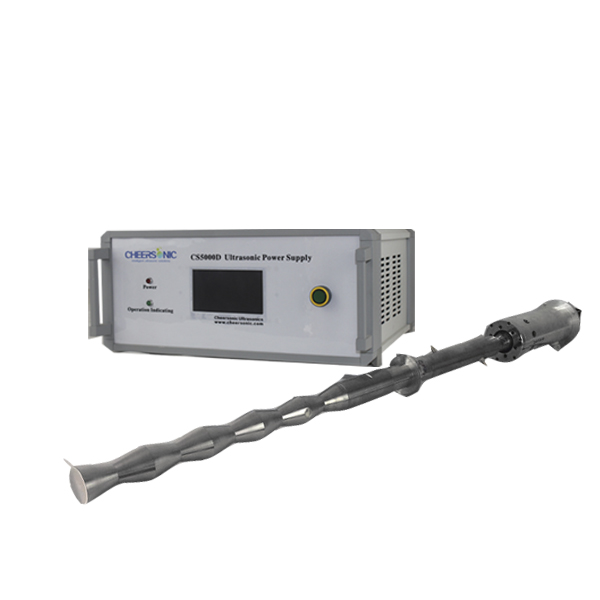
Request engineering support for your ultrasonic cutting or coating project: market2@cheersonic.com | +86 133-7254-0303
Have Questions or Need More Details?
Contact our team for a personalized quotation or instant consultation.
Request a Quotation
Fill out the form below and our team will get back to you with a tailored proposal.
WhatsApp Direct Chat
Prefer to chat in real-time? Message us on WhatsApp for instant assistance & quick answers.
- Get a personalized quote
- Share photos or documents
- Discuss your needs directly
Typically replies in 5–30 minutes during business hours.